Noah Pickett and Russell Pickett’s father-son relationship
Turtles All the Way DownNoah Pickett and Russell Pickett’s father-son relationship is defined in the evidence available to the reader not by scenes of their life together, but by the unanswered questions Russell’s disappearance leaves behind. Noah keeps imagining that his father might still be trying to communicate, while each day without a message deepens the possibility that he has been abandoned—or is dead. Aza Holmes becomes a listener to that uncertainty, and Noah’s grief eventually surfaces in a moment when hope can no longer keep fear at bay.
The Relationship Under the Pressure of Disappearance
Russell’s absence turns an ordinary parent-child bond into a problem Noah cannot stop trying to solve. He tells Aza that nobody wants to find his father, then asks whether Russell might have disappeared without texting them, or might be trying to reach them in a way they have not yet understood. The possibility matters because it lets Noah imagine that silence does not mean rejection. His questions are not abstract speculation: he wants to know whether his father has chosen to leave his sons without saying goodbye, or whether some barrier has prevented contact.
Noah tests that hopeful explanation against practical possibilities. If Russell were trying to communicate, Noah reasons, he could send an email or use a phone acquired elsewhere and public Wi-Fi. The detail makes the silence feel more painful: Noah can imagine methods that might overcome surveillance, but cannot identify any sign that his father has used them. He asks Aza to keep looking, making the search a continuing expression of attachment as well as an effort to locate Russell.
Noah’s Need for Contact
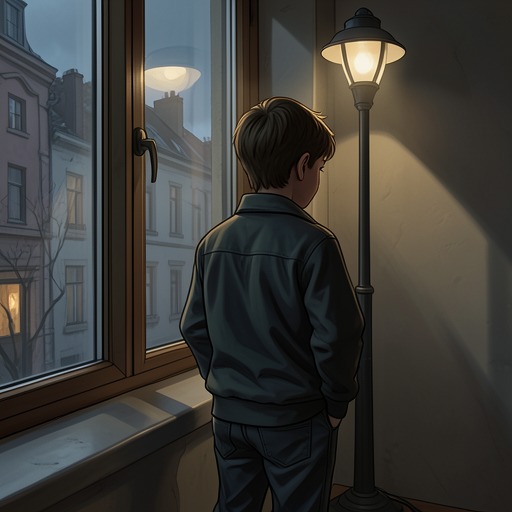
The relationship is also marked by the fear that Russell’s disappearance signifies a failure of love or trust. Later, Daisy considers how strange it is for a father to leave his children without even a goodbye and wonders why Russell would not send a message simply to tell them he was safe. Aza’s attention, however, turns especially toward Noah: she imagines the thirteen-year-old waking each morning with the possibility that this might be the day his father returns, then trying to distract himself at night with video games. Russell’s silence is thus registered not only as a mystery but as a repeated emotional injury.
Aza also recalls the terms of Russell’s estate plans, which privilege a tuatara over Noah. In the context of the missing messages, that provision sharpens Noah’s fear that his father does not love or trust him enough to make contact. It does not explain why Russell disappeared, but it gives the absence a painful meaning for the people left behind. Noah’s father is not simply unreachable; the available evidence makes it possible for Noah to read that distance as evidence of his own diminished importance to Russell.
Aza as Listener and Counterpoint
Aza responds to Noah’s questions with possibilities rather than certainty. She suggests that Russell may be waiting until it is safe, or may be scared, trying to help Noah preserve hope while recognizing that there may be no reassuring answer. Her role is shaped in part by her own experience of loss. She keeps her father’s old phone and charger hidden in Harold’s trunk, returns to the photographs on the device, and tells her father that she misses him. The phone offers a continuing connection to someone known to be dead; Noah, by contrast, is trying to sustain a connection to a father whose fate remains unclear.
That difference gives Aza’s listening a particular intimacy without making the two losses interchangeable. She understands what it means to keep returning to a parent through memory and an object, but Noah still waits for a response that might come from Russell himself. When Noah asks her to continue looking, his request carries both the practical aim of the search and the emotional need not to have his hope dismissed. Aza’s own attachment to her father helps her take that need seriously.
Grief Without Confirmation
The relationship reaches its most painful point when Noah finally breaks down. After a frightening possibility is raised, he says he had never let himself think that his father might be dead. His voice catches; he collapses against Aza, who holds him as he cries. The question he asks—whether Russell is dead—turns the long uncertainty into immediate grief. Aza answers that he does not know that, even as she recognizes that Noah, in some sense, already understands what the absence may mean.
Noah lies beside Aza on the couch and repeatedly asks what he should do. The repetition shows how little comfort a search or explanation can offer at that moment: he has to face the possible loss without a confirmed account of what happened or a final communication from his father. The evidence does not resolve Russell’s fate in this exchange. Instead, it shows Noah moving from the hope that his father might still find a way to contact him toward a painful recognition that the lack of any trail or message may itself be significant.
Significance
The father-son relationship is therefore presented as an attachment maintained under radically unequal conditions: Noah continues to seek Russell, while Russell’s silence leaves Noah to supply possible explanations for it. The search, the imagined burner phone or public Wi-Fi, and the wish for even a brief sign of safety all give the bond concrete form. Its unresolved quality matters. Noah’s eventual tears do not prove what happened to Russell; they reveal the cost of having to live between the hope of return and the fear that there will be no return at all.